
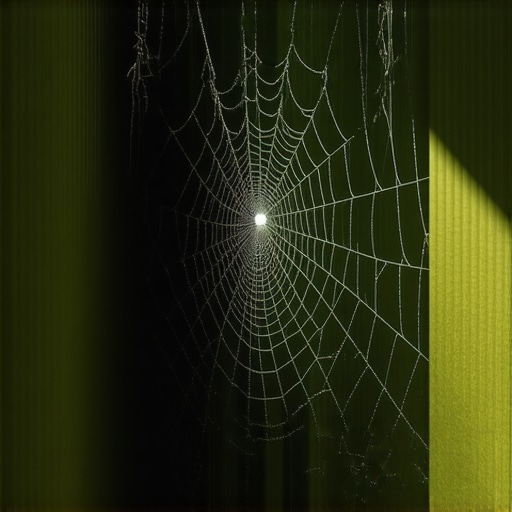
The appearance of a cobwebbed room in a dream is not a casual nocturnal flicker; it represents a profound, often unsettling, indicator of spiritual or material stagnation within the observer’s reality, demanding immediate and rigorous introspection. This isn’t about mere dust, but about the insidious accumulation of neglected duties, forgotten aspirations, and unaddressed spiritual breaches that bind an individual in a state of inertness.
The Architecture of Stagnation: Decoding Islamic Dream Symbolism
Within the intricate framework of Islamic dream interpretation, every element serves as a cog in a larger, divinely orchestrated mechanism of guidance. The ‘cobwebbed room’ is a particularly potent metaphor for abandonment, disuse, and the slow, silent growth of spiritual and worldly impediments. It speaks to an internal space—a chamber of the soul, a neglected aspect of one’s faith, or a professional endeavor—that has been left untended, allowing the metaphorical dust and spiders to claim dominion. This is the operational logic of divine communication: symbols are not random, but precisely calibrated messages.
Consider the core elements that frequently accompany this overarching theme of stagnation. A dream of salt, for instance, often carries dual connotations. While salt is a preservative and a symbol of purity, its presence in an unwelcome context, or its absence where expected, can signify a loss of blessings, a diminished taste for life’s goodness, or a spiritual bitterness that sours one’s interactions and inner peace. The integrity of one’s spiritual state, much like the preservation qualities of salt, dictates the vitality of their journey.
More acutely, a dream of no water in the tap directly reflects a scarcity of blessings, a lack of spiritual sustenance, or an emotional dryness that leaves one feeling parched. Water, in Islam, is life, purity, and mercy; its absence from a tap—a source of immediate provision—points to a blockage in the flow of divine grace or personal effort. This manifests as a palpable spiritual thirst, a condition many experience but rarely trace to its symbolic root.
When an individual dreams of talking but hearing another voice, the implication is often one of internal discord, external interference, or even a subtle divine whisper competing with the ego’s clamor. This auditory dissonance signifies unresolved conflicts in decision-making, a compromised sense of self-agency, or a critical misalignment between one’s outward expression and inner conviction. It is the hum of spiritual static, obscuring clarity and purpose.
The recurring dreaming of Surah Yusuf provides a counter-narrative, a divine balm for trials. This Surah, rich in themes of patience, perseverance through adversity, and ultimate triumph through divine planning, serves as a powerful reminder that even in the deepest wells of stagnation, there is a trajectory towards resolution. It’s an architectural blueprint for navigating seemingly insurmountable challenges, emphasizing faith over immediate gratification.
A dream of a hole in the wall points to a breach in one’s defenses, a vulnerability—spiritual, emotional, or physical—that has gone unnoticed or unaddressed. This can signify a hidden weakness, a broken boundary, or an area where one’s privacy or security is compromised. The wall represents protection and stability; its perforation indicates a point of entry for negative influences or a slow decay of foundational strength. Similarly, a dream of a mouse not working highlights stalled progress or minor, persistent issues that, while seemingly insignificant, collectively halt advancement. It is the operational reality of small, cumulative failures.
The frustration of a dream of a puzzle with missing piece speaks directly to incompleteness, a lingering question, or an unresolved aspect of one’s life or understanding. This symbolizes a void that prevents the entire picture from forming, indicating a mental or spiritual impasse where clarity is withheld until the missing component—be it knowledge, action, or acceptance—is found. In contrast, the dream of spilling makeup suggests a superficial loss, a wasted effort in maintaining outward appearances while neglecting inner substance. It’s a critique of prioritizing external polish over genuine spiritual refinement.
A dream of a glass of water spilling (which can also be linked to the more general notion of spilling, as explored in other contexts like mop buckets) symbolizes a loss of blessings, wasted resources, or an emotional overflow that feels uncontrolled. It’s a tangible representation of blessings slipping through one’s grasp, often due to carelessness or neglect. Finally, the ominous dream of a mountain crumbling signifies a significant trial, the collapse of support, or the breakdown of long-held ambitions and structures. Mountains represent stability and immense challenges; their erosion points to a monumental shift or an impending loss of foundational strength.
The Historical Arc: Evolution of Islamic Dream Interpretation and Modern Blind Spots
The practice of Islamic dream interpretation, known as *ta’bir al-ru’ya*, boasts an uninterrupted lineage stretching back to the Prophet Muhammad (peace be upon him), who frequently interpreted the dreams of his companions and even related his own prophetic visions. This
This post truly highlights how dreams serve as divine signals, especially those related to stagnation like the cobwebbed room. Personally, I’ve experienced stages of spiritual dryness, and understanding these symbols helped me realize the importance of actively tending to neglected areas of faith and personal growth. It’s a reminder that neglect can silently build up, like dust accumulating in an untouched space. I wonder, in today’s busy world, how can we consistently stay aware of these subtle signs and respond before stagnation becomes overwhelming? Sometimes, I find that setting regular reflections or seeking spiritual guidance helps keep our internal spaces clean and vibrant. What strategies do others find effective in reconnecting with neglected aspects of their faith or goals?”}**where:{