
The interpretation of dreams within Islamic tradition is not a superficial exercise in folklore, but a deeply structured hermeneutical practice, often misunderstood in its contemporary application, especially when confronting symbols as profound as the birth of a baby boy and its implications for new beginnings.
A veteran in this field understands that the subtle distinction between a “true vision” (ru’ya) from Allah and a “confused dream” (hulm) stemming from Shaytan or mere worldly anxieties, is not merely academic; it forms the bedrock of authentic Islamic dream interpretation. This rigorous evidentiary chain is often overlooked in mainstream discussions, directly influencing how one approaches symbols like birth. The quiet rustle of old manuscripts, their brittle pages whispering centuries of scholarly exegesis, is the true environment where such profound interpretations are born, not the ephemeral digital flicker of a search engine.
The Historical Arc of Islamic Oneirology
To truly grasp the Islamic dream meaning of giving birth to a baby boy and the profound implications of new beginnings, one must first appreciate the historical and evolutionary arc of Islamic oneirology. The “Legacy World” of dream interpretation, spanning from the time of Prophet Muhammad (peace be upon him) through the classical Islamic Golden Age, was characterized by a meticulous approach rooted in Quranic verses, prophetic traditions (Hadith), and the exemplary interpretations of companions like Ibn Sirin. This was a system built on piety, knowledge, and a deep understanding of human psychology and spiritual states.
In this historical context, a dream was never an isolated event. It was considered a potential communication, a glimpse into the unseen, or a reflection of one’s inner state. The interpretation required not just knowledge of symbols, but also the context of the dreamer’s life, their righteousness, and their intentions. Unlike the fragmented, often sensationalist interpretations found in the current digital age, classical scholars emphasized caution, advising against divulging every dream and stressing that good dreams are from Allah, while bad dreams are from Shaytan and should be dismissed by seeking refuge in Allah.
The disruption we observe today is the proliferation of generalized meanings, detached from the spiritual discipline and contextual awareness that defined the practice for centuries. Many err by applying universal symbols without considering the dreamer’s specific spiritual state, personal circumstances, or geographic context—a common failure point that transforms a potentially guiding vision into mere superstition. This erosion of nuanced understanding represents a significant operational scar, where the depth of traditional wisdom is exchanged for superficial accessibility.
Symbolic Architecture: Birth, Boys, and Genesis
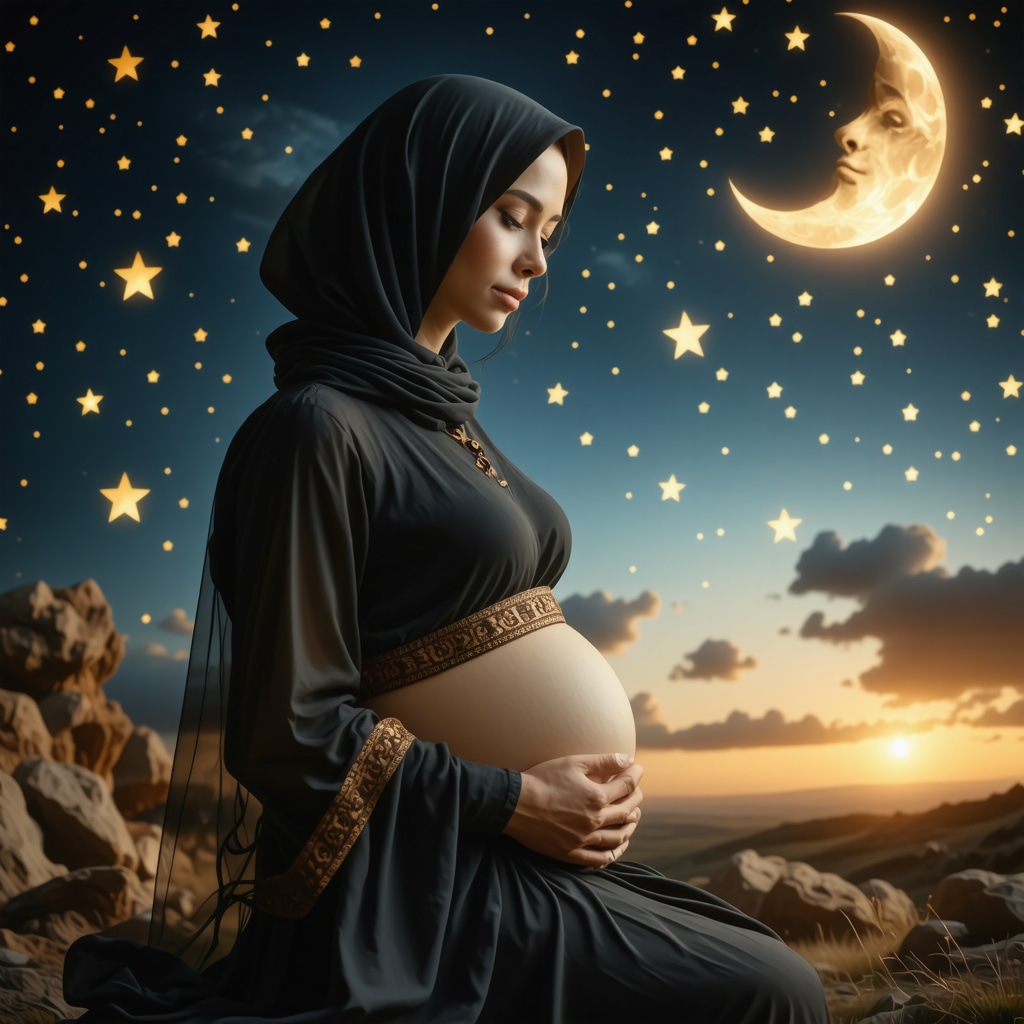
The architecture of symbolism surrounding “giving birth to a baby boy” in an Islamic dream is intricate, far exceeding a simple dictionary definition. It’s a multi-layered structure of meaning that interlocks with core Islamic tenets. Firstly, the act of birth itself inherently signifies new beginnings, genesis, and the emergence of something significant into one’s life. It can represent new projects, fresh opportunities, spiritual rebirth, or a major life transition. The sheer act of creation, even in a dream, echoes Allah’s creative power.
The specification of a “baby boy” adds another layer of meaning. Traditionally, boys are associated with strength, lineage, responsibility, and sometimes, trials. In many interpretations, a baby boy might symbolize an important undertaking that requires effort and commitment, or perhaps the manifestation of a long-held desire that carries significant weight. This is not to say that a girl is less significant, but the *symbolic* weight differs. A boy can signify authority, leadership, or an increase in one’s worldly provisions (rizq) and blessings (barakah), but often with accompanying responsibilities or challenges.
The deeper logic here connects to the concept of *fitra* (natural disposition) and divine decree (*qadar*). A dream of a baby boy can signify a blessing from Allah, an indication of future prosperity or success, or even a warning to prepare for increased responsibilities. It is the manifestation of potential, a blueprint for future action. How this dream is experienced—joyfully, with apprehension, or with difficulty—modifies its interpretation. A difficult birth might suggest trials preceding success, while an easy birth might signify smooth sailing. This architectural breakdown requires the interpreter to consider the nuances of the dream narrative, the dreamer’s current life stage, and their spiritual standing, moving beyond mere surface-level symbolic association.
Navigating the “Operational Scar”: Misinterpretation Pitfalls
A significant “operational scar” in contemporary dream interpretation within an Islamic framework is the prevalent misapplication of generalized symbols, leading to poor decision-making. Imagine an individual, having a vivid dream of giving birth to a baby boy, immediately concludes it signifies a sudden, massive financial windfall. They might, based on this superficial reading, prematurely abandon a stable, if unexciting, career path or invest heavily in a high-risk venture, neglecting the pragmatic wisdom of their peers and the principles of *tawakkul* (trust in Allah combined with effort).
The operational reality is that an authentic interpretation would scrutinize the dream in its totality. Was the baby healthy? Was the dreamer prepared for its arrival? Were there any signs of struggle or ease? More importantly, the interpreter would consider the dreamer’s spiritual health, their financial practices, and their adherence to Islamic principles. A dream of a baby boy, for someone struggling financially but maintaining spiritual discipline, might not signify immediate wealth, but rather a blessing in their sustenance, an increase in their inner strength to persevere, or a future project that requires sustained effort to bear fruit.
The messy reality is that misinterpreting such a powerful symbol can lead to misplaced expectations, disillusionment, and even spiritual stagnation. It’s akin to reading a complex engineering schematic with only a basic understanding of its legends—the outcome is bound to be catastrophic. True guidance requires a holistic approach, where the dream acts as a catalyst for reflection and seeking counsel, rather than a definitive, literal roadmap. This is why many traditional scholars caution against self-interpretation without sufficient knowledge and piety, recognizing the immense potential for self-deception or misguidance from external influences.
The Visionary Forecast: Redefining Interpretative Practice
Looking five years ahead, the landscape of Islamic dream interpretation—especially concerning significant symbols like the birth of a baby boy and the broader concept of new beginnings—will undergo a strategic shift. We are moving beyond the current dichotomy of overly simplified online interpretations and inaccessible scholarly texts. The visionary forecast suggests a rise in ethically grounded, digitally-enabled platforms that integrate classical methodologies with personalized contextual analysis, bridging the gap between historical accuracy and modern accessibility.
This means leveraging AI, not to generate interpretations, but to act as an advanced indexing and cross-referencing engine for classical texts, Hadith, and Quranic exegesis, presenting comprehensive interpretive frameworks to qualified scholars. The goal is to provide a more informed basis for interpretation, minimizing the reliance on isolated, potentially misleading symbolic associations. Such platforms might analyze patterns across various dreams submitted by a single user over time (with explicit consent and privacy protocols), providing scholars with a richer context of the individual’s spiritual journey, rather than just isolated dream events.
For instance, if someone frequently dreams of fish out of water or being chased by an animal, alongside a dream of a baby boy, an integrated analysis could suggest a broader narrative of overcoming personal struggles and anxieties before truly embracing a significant new beginning. This approach will move beyond mere symbolic lookup, towards a more sophisticated, evidence-based hermeneutics, driven by a commitment to preserve the integrity of Islamic dream science while making it relevant for contemporary seekers.
Integrating Broader Dream Symbolism
While the focus remains on birth, the principles of interpretation extend to other common dream themes mentioned, such as a dream of a pen running out of ink. This isn’t merely a logistical inconvenience in the dream; it can symbolize a halt in one’s journey of knowledge, a pause in communication, or the exhaustion of one’s creative or intellectual resources. Similarly, a dream of a game you can’t win speaks to feelings of powerlessness, a struggle against insurmountable odds, or perhaps a warning against engaging in futile pursuits. These are echoes of the broader human condition, filtered through an Islamic spiritual lens.
Even seemingly mundane dreams like dream of drinking cold coffee, or dream of bread with mold carry weight. Cold coffee might symbolize missed opportunities for spiritual rejuvenation or an unenthusiastic approach to religious duties, while moldy bread could signify tainted sustenance, ill-gotten gains, or neglected blessings. The “Meaning of Number 1 in a dream” often points to unity, uniqueness, or the beginning of a cycle. These interpretations are not arbitrary; they are derived from associations within the Quran and Sunnah, and from centuries of scholarly consensus, ensuring a consistent interpretive framework.
Addressing Executive Concerns: The Practicality of Dream Insights
For decision-makers and those seeking practical guidance, the primary concern often revolves around the utility of dream interpretations. Is this merely a subjective exercise, or can it offer actionable insights? The answer lies in understanding the core philosophy: Islamic dream interpretation is never meant to supersede intellect, logic, or adherence to the Shariah. It is a complementary source of insight, a subtle prompt, or a confirmation of an existing inclination that is already sound.
Consider the executive who dreams of a baby boy—a powerful symbol of new beginnings. Their first thought might be: should I launch that new division? Should I pursue that audacious merger? An authentic interpretation would steer them away from literal, impulsive action. Instead, it would encourage reflection: are the conditions right for this new venture? Have I done my due diligence? Is this decision aligned with my spiritual values and responsibilities? The dream becomes a call to increased awareness and preparation, rather than a direct command. It confirms that a significant development is on the horizon, but the *method* of navigating it remains within the realm of conscious, informed decision-making, guided by Islamic ethics and practical wisdom.
The question of distinguishing between divine inspiration and wishful thinking is paramount here. A true vision will often resonate with one’s innermost truth, encourage righteousness, and align with universal Islamic principles. It will not contradict clear religious injunctions or promote harmful actions. Wishful thinking, conversely, often caters to immediate desires, ignores potential pitfalls, and lacks the profound resonance of a genuine spiritual insight. The operational logic dictates that any dream interpretation must be cross-referenced against the teachings of Islam and sound reasoning. If a dream suggests a path, but all practical indicators and Islamic ethics advise caution, the dream’s interpretation must be re-evaluated or dismissed as a confused dream.
Ultimately, the practical steps one should take after such a dream are not about blind obedience to a symbolic message, but about increased *taqwa* (God-consciousness), *istiqamah* (steadfastness), and *istikhara* (seeking Allah’s guidance through prayer). A dream of new beginnings—especially the symbolic birth of a baby boy—is an invitation to spiritual and practical preparation, to strengthen one’s connection with Allah, and to approach the impending changes with wisdom, humility, and unwavering faith. It affirms that growth and development are part of life’s journey, and with proper understanding, these profound internal messages can indeed serve as beacons.
![Holding Otters: [Pregnancy Dreams] Mirror Womb Security](https://en.islamskisanovnik.net/wp-content/uploads/2026/03/Holding-Otters-Pregnancy-Dreams-Mirror-Womb-Security.jpeg)