
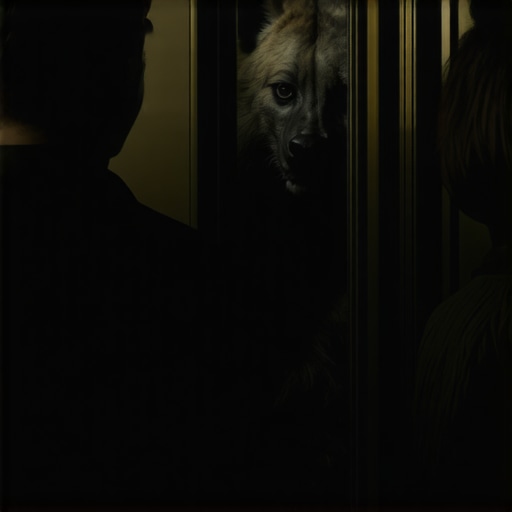
The appearance of a hyena in the subconscious landscape is rarely a matter of simple coincidence. When we encounter the specific, haunting image of a hyena’s grin, we are often forced to confront the parts of our psyche that we would rather keep hidden in the dark. In the cultural context of the United States and broader Western traditions, the hyena occupies a unique space between the wild predator and the opportunistic scavenger. This duality makes the creature a potent symbol for moral ambiguity and the internal tug-of-war between our higher ideals and our base instincts. The grin itself is not a sign of joy, but rather a complex biological and symbolic expression that mirrors the tensions within our own characters. By exploring the depths of this imagery, we can begin to decode the messages our minds are sending us regarding our integrity, our social interactions, and our spiritual health.
The Traditional Symbolism of the Hyena’s Grin
Throughout history, the hyena has been a misunderstood and often maligned figure in folklore. Traditional interpretations often lean into the creature’s role as a scavenger, one who thrives on the remains left by others. In many ancestral stories, the hyena is viewed as a trickster, a shape-shifter that can mimic human voices to lure the unwary into the wilderness. This ability to deceive is central to the symbolism of the ‘grin.’ Ancestors in various cultures believed that seeing such a creature in a dream or vision was a warning of deceit—either from an external source or, more poignantly, from within one’s own heart. Unlike the regal lion or the loyal dog, which you can learn about in our guide on understanding dreams about dogs, the hyena represents a more chaotic and unpredictable element of nature. In some traditions, the hyena’s presence was thought to bridge the gap between the living world and the world of the spirits, acting as a bone-crushing sentinel that cleanses the land. This cleansing, however, is not gentle. It is visceral and raw. The grin, therefore, was often interpreted as a sign that the ‘truth’ was being revealed in a way that might be mocking or uncomfortable. It suggests that the masks we wear in polite society are being stripped away by the scavenger spirit, leaving only the bare bones of our intentions. Historically, if a person dreamt of this laughter-like expression, they were encouraged to look at where they might be ‘scavenging’ energy or credit from others instead of hunting for their own success. It is a call to move away from opportunistic behavior and toward a more grounded, honest way of living. This traditional view sets the stage for a deeper look into the general symbolism of animals in our subconscious, where every creature carries a weight of ancient wisdom and warning.
The Psychological Significance: Mirroring the Shadow Self
From a psychological perspective, the hyena’s grin serves as a perfect metaphor for the ‘shadow self.’ This concept involves the parts of our personality that we reject or find unacceptable—our greed, our darker humor, and our survival instincts. When the hyena appears to be laughing or grinning at you, it is often an internal reflection of a moral dilemma you are currently facing. Layer one of this significance deals with our internal fears and desires. Are you afraid that your success is unearned? Or perhaps you feel a secret satisfaction when someone you dislike fails? This ‘scavenger’ mentality is something everyone possesses to some degree, but it is often repressed. The hyena’s grin forces us to look at this opportunistic side. It represents the cackle of the ego when it wins a small, perhaps unethical, victory. If you are experiencing significant stress or a major life transition, such as those often reflected in dreams of pregnancy, the hyena may appear as a reminder that your survival instincts are peaking, potentially at the cost of your moral compass. Layer two explores our emotional state, particularly regarding social hierarchy and peer pressure. Hyenas are highly social animals with complex and often brutal hierarchies. In the modern world, this translates to our workplace dynamics or social circles. Are you laughing along with a group at someone else’s expense just to fit in? That uncomfortable feeling in the pit of your stomach is the psychological equivalent of the hyena’s grin. It is the realization that your actions are out of alignment with your true values. This dissonance creates a ‘moral conflict’ that the brain manifests as a mocking predator. Furthermore, the hyena’s grin can represent the fear of being mocked by others. If you are struggling with self-esteem, the grin might not be your own, but rather your perception of how the world sees you—waiting for you to stumble so it can scavenge what remains. This is particularly relevant when dreams involve themes of loss, much like the vulnerability felt in dreams of losing teeth, where a sense of powerlessness can invite the ‘predatory’ laughter of the subconscious.
Variations of the Hyena’s Grin: Specific Scenarios
The meaning of the hyena’s grin can shift significantly based on the context of the encounter. For instance, seeing a lone hyena grinning from a distance suggests a lingering moral issue that you are aware of but have not yet confronted. It is a distant warning to check your integrity before the situation gets closer. Conversely, if you are surrounded by a pack of grinning hyenas, this often points toward a collective moral conflict. You may feel pressured by your ‘pack’ or social group to engage in behavior that feels wrong. This scenario is closely linked to interpretations of war and conflict, where the individual’s ethics are tested by the group’s demands. The size and color of the hyena also play a role. A giant hyena with an exaggerated grin might represent an overwhelming sense of guilt that has grown too large to ignore. A white hyena, though rare, might symbolize a ‘cleansing truth’—a realization that, while painful or mocking, is necessary for your spiritual growth. If the hyena is in your home, it suggests that the moral conflict is personal, perhaps involving family or your private life, similar to the intimate reflections found when dreaming about your mother. If the hyena’s grin turns into a full-blown cackle, it often indicates that the situation has reached a breaking point; the ‘secret’ is out, or the consequences of a choice are now manifesting. Another variation involves the hyena interacting with other animals. If it is mocking a snake, it might represent a conflict between two different types of ‘shadow’ energy—the deceptive, hidden nature of the snake versus the overt, scavenging nature of the hyena. For more on this, you might explore the symbolism of snakes. Each variation serves as a specific coordinate, helping you map out exactly where your inner peace is being disrupted and what specific ‘moral carrion’ you need to clear away to find balance.
What to Do: Practical Steps for Self-Reflection
When you are haunted by the image of the hyena’s grin, the most important step is honesty. This is not a time for fear, but for an audit of your current life path. Start by identifying the ‘cackle’ in your waking life. Where are you taking the easy way out? Are there areas where you are benefiting from someone else’s misfortune or hard work? This is the essence of the scavenger spirit. Practical advice includes journaling specifically about your ‘shadow’ moments—the times you felt a flicker of joy at a rival’s failure or the times you stayed silent when you should have spoken up. This self-reflection is the only way to stop the hyena from mocking you in your sleep. If the dream is tied to a specific conflict at work or in your personal life, consider seeking a resolution that favors integrity over opportunistic gain. Sometimes, the hyena appears because we are being too hard on ourselves, and the ‘grin’ is actually our own self-criticism. In this case, learning to distinguish between healthy guilt and destructive shame is vital. Surround yourself with influences that promote growth rather than ‘scavenging.’ Much like the grace found in perspectives on cats, try to find a sense of independent dignity that doesn’t rely on the scraps left by others. Finally, remember that the hyena is a survivor. Its grin, while unsettling, is a testament to its ability to endure in harsh conditions. Use this energy to survive your own moral trials, not by cutting corners, but by having the bone-deep strength to do what is right, even when the ‘pack’ is laughing. By addressing the root of the conflict, you turn the mocking grin into a silent respect for your own character development.