
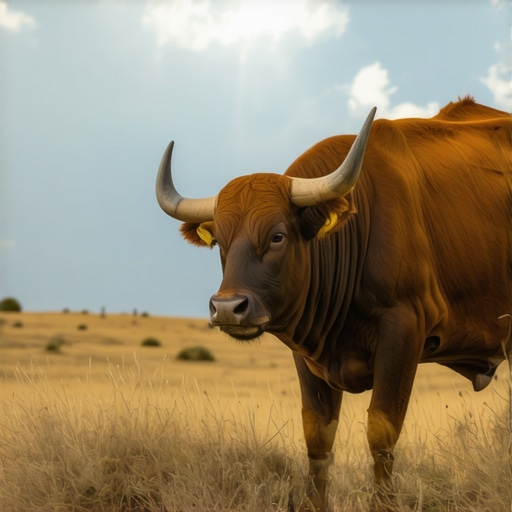
The Traditional Symbolism of Angry Bull Dreams: Islamic Meaning of Raw Strength and Will
In the rich tapestry of Islamic dream interpretation, animals often serve as conduits for profound spiritual messages, and the bull—or Al-Tawr in Arabic—is among the most potent of these symbols. When we encounter an angry bull in a dream, we are witnessing a manifestation of raw strength, unbridled power, and the formidable nature of the human will. Traditionally, Islamic scholars like Ibn Sirin viewed the bull as a symbol of a man of high status, a leader, or an influential figure within a community. However, when that bull is angry, the interpretation shifts from mere presence to active confrontation or internal turmoil. Ancestral folklore suggests that seeing a charging bull represents a year of significant change or a period where one must defend their honor against a powerful adversary. Unlike the general interpretation of animals in dreams, the bull specifically points toward the physical world—wealth, leadership, and the labor required to sustain a family. If the bull is calm, it denotes prosperity; if it is enraged, it warns of a coming storm in one’s social or professional circle. The ‘anger’ of the bull is rarely seen as random malice; rather, it is viewed as a mirror of the dreamer’s environment. Perhaps there is a dispute with a superior or a rebellion against a traditional structure that the dreamer is currently navigating. This symbol challenges us to look at how we handle authority and whether we are using our own power with wisdom or with destructive force. In many folk traditions across the Middle East and beyond, the bull’s horns are seen as the ‘two pillars’ of strength—one representing worldly power and the other spiritual resilience. To dream of an angry bull is to be reminded that while strength is a gift, it must be tempered by the Aql (intellect) to prevent it from becoming a source of regret. The ancestors believed that such dreams were calls to action, urging the dreamer to prepare for a trial of character that would ultimately determine their status in the eyes of their peers and their Creator.
The Psychological Significance
Layer 1: Internal Fears and Desires. From a psychological perspective, an angry bull is often the subconscious mind’s way of personifying ‘The Shadow.’ It represents the parts of our personality that are aggressive, stubborn, or intensely passionate—traits that we might suppress in our waking life to conform to social norms. When these traits are denied, they often reappear in our dreams as a charging bovine. This connection to the bull signifies a subconscious yearning for control. Are you feeling powerless in a situation at work or in your family? The bull’s rage is your own repressed frustration coming to the surface. It is the ‘id’ demanding to be heard, signaling that your current path requires more assertiveness or, conversely, that your aggression is reaching a breaking point. Much like the intense energy found in dreams of war and conflict, the angry bull represents a battle happening within the psyche. It asks: Are you the one leading the bull, or is the bull leading you? Layer 2: Emotional State. The emotional landscape of the dreamer during an angry bull encounter is usually one of high stress or transition. If the dreamer feels paralyzed by fear, it indicates a lack of confidence in facing a looming challenge. If the dreamer feels a sense of defiance, it suggests they are ready to step into a leadership role but are wary of the responsibilities it entails. This dream often occurs during ‘mid-life’ or ‘quarter-life’ crises, where the pressure to provide and the pressure to succeed collide. The bull is the personification of ‘The Provider’ archetype. Its anger reflects the weight of expectations. If you are currently experiencing a major life transition—such as a career change or marriage—the bull symbolizes the raw energy needed to push through the obstacles of that transition. It is a reminder that while growth is often violent or chaotic, it is the only way to reach a state of true willpower and maturity.
Variations of Angry Bull Dreams
The specific details of the bull—its color, its actions, and its size—drastically alter the spiritual takeaway. A black bull is traditionally associated with mystery, deep-seated power, and sometimes a formidable enemy who hides their intentions. To see an angry black bull suggests that the dreamer is facing a challenge from an unknown source or is grappling with a profound internal darkness. Conversely, a white bull, even an angry one, is often seen as a symbol of noble strength or a trial that will lead to a ‘white’ (pure) outcome. It may represent a stern teacher or a religious authority figure who is pushing the dreamer toward better behavior. If the bull is red, it typically signifies passion, intense anger, or a warning of potential physical conflict. The horns of the bull are also crucial; if they are long and sharp, the threat or the power is immediate and ‘piercing.’ If the bull is charging but fails to reach you, it suggests that while threats are present, they will not result in actual harm. If you find yourself killing the bull in the dream, this is a powerful omen of victory over one’s own lower self or the defeat of a real-world rival. However, if the bull is chasing you through a narrow street, it mirrors the feeling of being trapped by responsibilities. Unlike the deceptive nature of snake dreams, the bull is direct. It does not hide; it confronts. This honesty in the dream world is a call for the dreamer to be equally honest in their waking life about their fears and their ambitions.
What to Do: Practical Advice for Reflection
Upon waking from such an intense vision, the first step is to seek refuge in Allah from the potential whispers of the ego. In Islamic tradition, if a dream is disturbing, one is encouraged to spit lightly to the left three times and change their sleeping position. Beyond the ritual, practical self-reflection is necessary. Ask yourself: Where in my life am I being too stubborn? Is there a conflict I am avoiding that has now grown into a ‘charging bull’? This is a time for Istikhara (seeking guidance) and for evaluating your personal boundaries. If the dream pointed toward wealth and prosperity, it may be a sign that you need to work harder or more aggressively to achieve your financial goals, but with the caveat of maintaining ethical standards. Engaging in charity (Sadaqah) can help mitigate the ‘heat’ of an angry dream, as it serves as a cooling balm for the soul’s anxieties. Use this dream as a catalyst to strengthen your resolve and to refine your character, turning raw aggression into disciplined strength.
Historical Origins and the Ritual of Interpretation
The bull holds a complex place in Islamic history. While the story of the Golden Calf in the time of Prophet Musa (AS) serves as a warning against idolatry and the misuse of wealth, the bull is also celebrated as a symbol of sacrifice and devotion during Eid al-Adha. This duality—between the bull as a false god and the bull as a sacred sacrifice—is the foundation of its dream meaning. The ‘angry’ bull represents the wild, unrefined state of the heart before it has submitted to divine will. In the culture of the US and other Western regions, the ‘Bull Market’ or the ‘bull in a china shop’ are idioms that reflect this same ancient understanding of power. To interpret these dreams properly, one must look at the ‘Ritual of Submission.’ In the dream, if the dreamer eventually calms the bull, it symbolizes the successful integration of their power. The objects used in the dream, such as a rope or a fence, symbolize the limitations and laws we must abide by. Modern interpretation in 2026 suggests that as our lives become more digital and disconnected from nature, the appearance of such a primal animal is a grounding force. It reminds us of our biological and spiritual roots. Preserving the essence of this symbolism means acknowledging that even in a high-tech world, the human spirit still grapples with the same raw strength and will that our ancestors faced in the fields. It is a timeless narrative of the struggle for mastery over the self and the world around us.