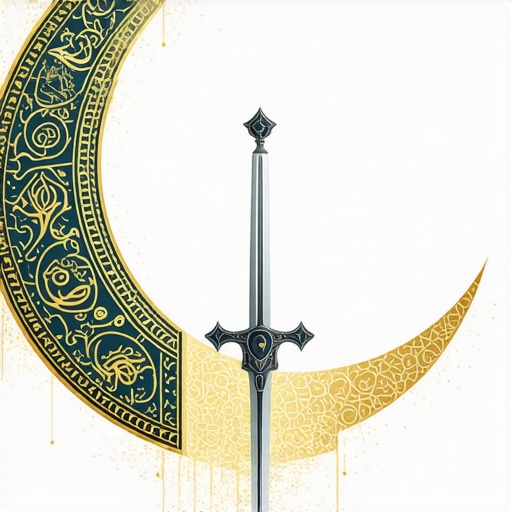
The human psyche, much like the ancient astronomers, has always sought profound meaning in the celestial dance. The moon, in particular, with its ephemeral phases and silent grandeur, has captivated our ancestors, profoundly shaping our spiritual understanding and cultural narratives. From the earliest civilizations, the moon was more than a mere nocturnal light; it was a living entity, a harbinger of cycles, and a silent observer of human destiny. The Sumerians, for instance, revered Nanna (or Sin in Akkadian) as the moon god, a powerful deity responsible for charting the passage of time and influencing the ebb and flow of existence, both in the physical world and the intricate tides of the human soul. This primordial, deeply embedded connection to the lunar rhythm underscores a fundamental truth: the cosmos mirrors the soul, and its symbols, when encountered in the liminal space of dreams, carry potent messages for our earthly journey.
How, then, do dreams of the crescent moon, seemingly a simple celestial observation, become such profound directives for the soul’s journey, particularly within the rich, layered interpretive tradition of Islam? This paradoxical question compels us to look beyond the obvious, the merely conscious association, and into the deeper strata of the collective unconscious, where archetypal patterns and divine wisdom converge.
Within the Islamic context, the crescent moon, known as the hilal, holds an especially revered and practical significance that extends far beyond astronomical observation. It is the celestial herald that marks the commencement of each new month in the lunar Hijri calendar, dictating the timing of crucial religious observances such as the sacred fasting month of Ramadan, the joyous celebration of Eid al-Fitr, and the pilgrimage of Hajj. This deep cultural and religious embedding imbues the crescent moon with an immediate, conscious association with new beginnings, renewal, community cohesion, and the unfolding of divine decree. To dream of a crescent moon, therefore, often evokes feelings of hope, anticipation, and the promise of a fresh start, aligning perfectly with the conscious human desire for spiritual growth, personal transformation, and new opportunities. It stands as a celestial beacon, signaling the turn of a page, an invitation to embark upon a new phase of life or faith with renewed vigor and profound intention. This surface meaning, readily accessible to the conscious mind, reflects our intuitive understanding of cycles, progress, and the forward momentum inherent in life’s journey.
Yet, much like the moon itself, which always presents a partially illuminated face while keeping vast expanses in shadow, the crescent moon in a dream carries a more profound, often overlooked, ‘shadow meaning.’ In the lexicon of Carl Jung, the shadow represents the unconscious aspects of the self, encompassing both repressed desires and unacknowledged potentials, which nonetheless profoundly influence our waking lives and conscious choices. The nascent sliver of light that constitutes the crescent moon, emerging from an encompassing darkness, powerfully symbolizes a new cycle that is still largely unknown, vulnerable, and pregnant with both immense potential and unacknowledged challenges. What parts of ourselves remain submerged in shadow as this new cycle begins? What fears or resistances might unconsciously accompany the prospect of significant change? What unresolved issues or dormant potentials, if left unexamined, might either hinder or profoundly enrich this emerging phase? The dream of the crescent moon, in this light, prompts a profound inquiry into these unlit corners of the psyche.
“Until you make the unconscious conscious, it will direct your life and you will call it fate.” – C.G. Jung
A crescent moon dream, viewed through this Jungian lens, is a potent psychological call to introspection, urging us to examine not just the exciting prospects of a new chapter, but also the hidden anxieties, unresolved conflicts, or unacknowledged strengths that might either impede or significantly enhance this transition. It demands that we confront the discomfort of the unknown, the inherent vulnerability in nascent phases, and the parts of ourselves we might be reluctant to bring into the full light of conscious awareness. Ignoring these subconscious undercurrents allows the ‘fate’ that Jung spoke of to orchestrate our lives from the shadows, potentially steering us away from our true path or hindering genuine growth.
The symbolism of the crescent moon is further amplified when we connect it to archetypal journeys and celestial guides, a recurring motif across mythologies and spiritual traditions worldwide. Joseph Campbell, in his seminal work on the monomyth or the Hero’s Journey, illuminated how heroes across cultures are frequently guided by extraordinary signs or celestial figures through periods of profound transition, trial, and transformation. The crescent moon, in this archetypal framework, serves as a universal guide, a luminous compass navigating the hero—the dreamer—through the uncertainties of a personal wilderness, offering illumination where the path is still dim.
Within Islamic spiritual philosophy, the concept of hidayah, or divine guidance, is central to a believer’s journey. The crescent moon in a dream can symbolize a profound moment of receiving such *hidayah*, an inner compass illuminating the path forward through spiritual awakening or a nascent call to a higher purpose. This resonates deeply with the various mystical ‘night journeys’ (like the Mi’raj of the Prophet Muhammad, peace be upon him) found in Sufism and other esoteric traditions, where nocturnal celestial guidance is paramount to spiritual ascent and revelation. Historically, the Hijra—the Prophet Muhammad’s migration from Mecca to Medina—marked a monumental new beginning for Islam, often commenced under the auspicious sighting of a new moon, symbolizing divine providence, protection, and the dawn of a new era for an entire civilization. This historical event profoundly embedded the symbolic weight of the new moon as a marker of divinely guided transition and renewal within the collective consciousness of Muslims.
The ubiquitous presence of the crescent moon in Islamic art, calligraphy, and architecture throughout the ages further reinforces its deep cultural and spiritual significance. It is not merely an ornamental flourish but a deeply symbolic motif that embodies aspiration, unwavering faith, and the nascent, ever-renewing spirit of Islam. From the delicate illuminations of ancient manuscripts to the majestic pinnacles of mosques and the proud banners of empires, the crescent stands as a visual testament to guidance, new dawns, and the continuous spiritual journey of faith and renewal. This pervasive cultural presence ensures that the profound, embedded symbolism of the crescent moon as a sign of divine order and the ever-present possibility of rebirth, both personal and communal, remains vibrant and alive in the human imagination.
Looking deeper into the psychological implications, the moon’s phases are an exquisitely potent metaphor for the dynamic cycles of the human psyche: periods of active growth, necessary introspection, outward manifestation, and eventual recession. The crescent moon, in particular, represents the very inception of a new internal phase—a vulnerable, formative moment demanding careful nurturing and conscious attention. Psychologically, humans possess an inherent, fundamental need for new cycles; stagnation is not merely uncomfortable but antithetical to genuine well-being and psychological vitality. A dream of the crescent moon, therefore, can be the psyche’s urgent message to embrace change, to consciously seek out new avenues of expression, or to deliberately disengage from old patterns, beliefs, or relationships that no longer serve one’s spiritual or personal evolution. It is a profound call to recognize and respond to the subtle yet significant shifts occurring within, prompting a courageous realignment of one’s inner compass toward emergent possibilities.
Integrating the profound, multi-layered message of the lunar compass requires conscious engagement with both its conscious and unconscious promptings. Upon waking from such a dream, one is invited to pay close and sustained attention to nascent ideas, new opportunities that may be presenting themselves, or subtle yet insistent calls for change in one’s life. It is an encouragement to embrace the unknown aspects of a new beginning, to acknowledge any fears or resistances that surface, and to trust the inherent guidance that emanates from within—a profound wisdom often spoken in the evocative, symbolic language of dreams. This necessitates a conscious process of self-reflection and inner work.
“One does not become enlightened by imagining figures of light, but by making the darkness conscious.” – C.G. Jung
The crescent moon dream, therefore, is not merely a passive prophecy to be received but a profound, active prompt to consciously engage with emerging opportunities or necessary departures. It suggests a critical time to nurture fledgling projects, nascent relationships, or newly discovered spiritual practices, understanding that their true potential and robust growth lie in how attentively and consciously they are cultivated in their early, often vulnerable stages. Deep reflection, consistent journaling, and mindful observation of one’s internal emotional landscape and external synchronicities can serve as potent tools for deciphering and integrating the dream’s profound wisdom. The dream, ultimately, invites us to step forward with a humble heart and an open mind, trusting in the cyclical nature of existence and the ever-present, divinely orchestrated possibility of renewal, guided by the silent, luminous wisdom of the crescent moon as both an external celestial phenomenon and an internal psychic guide.