
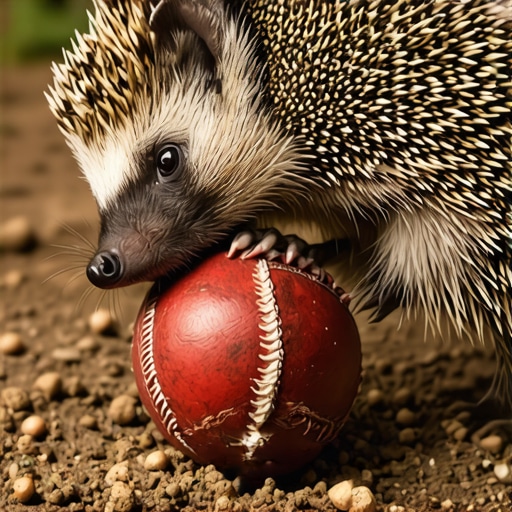
The Traditional Symbolism of Curling Hedgehogs: A History of Protection
In the quiet corners of our collective subconscious, the image of the hedgehog has long stood as a guardian of the self. Traditionally, the act of a hedgehog curling into a tight, impenetrable ball of quills is not merely a biological reaction but a profound symbolic statement about vulnerability and defense. In many ancient European traditions, the hedgehog was viewed as a wise traveler of the undergrowth, a creature that did not seek conflict but possessed the most efficient means of ending it. To see a hedgehog curl up in a dream or as a symbolic omen suggests that the environment has become hostile, or at least perceived as such. This behavior, often called the ball of spikes posture, reflects a desire to protect the softest parts of our being—the belly, the face, and the vital organs. Folklore tells us that the hedgehog carries the secrets of the earth, but only those who can approach it without triggering its defensive reflex can learn them. This mirrors the human experience where our emotional armor prevents us from receiving the very wisdom or connection we seek. When we look at animal symbolism broadly, such as in the Islamic dream dictionary interpreting dreams of animals, we see that every creature brings a specific message about our inner state. The hedgehog’s message is one of caution: while your quills protect you, they also isolate you from the world around you. Historically, this symbol was a reminder to the warrior and the farmer alike that constant vigilance can lead to a lonely existence. The prickles that keep the predator at bay also keep the friend at a distance. This ancient understanding sets the stage for our modern psychological exploration of why our self-defense mechanisms often backfire, turning a temporary shield into a permanent cage.
The Psychological Significance: The Hidden Cost of Emotional Quills
Layer 1: Internal Fears and the Subconscious Need for Safety
Psychologically, the curling hedgehog represents the self-isolation and social withdrawal that occurs when we feel emotionally threatened. This is a manifestation of our survival instinct, often triggered by past traumas or the fear of rejection. When a person adopts a defensive posture, they are essentially saying that the risk of being hurt is greater than the reward of being known. This protective barrier is built over years of experience, layer by layer, quill by quill. However, the tragedy of the curling hedgehog is that the more it protects itself, the more it loses sight of the outside world. In a dream state, this symbolizes a part of your personality that has gone into ‘lockdown.’ Much like how people look for meaning in dream interpretations of war and conflict, the presence of a defensive animal indicates an internal battle where the ego is trying to maintain its integrity against perceived slights or emotional attacks. This hedgehog effect creates a paradox: we crave intimacy, yet we prick those who get close. The instinctive reaction to shut down when things get difficult is a survival mechanism that, when overused, results in a backfiring of our intentions. Instead of being safe, we become stagnant.
Layer 2: Emotional State and the Transition of the Soul
Beyond simple fear, the curling hedgehog reflects a state of high emotional safety monitoring. If you find yourself dreaming of these creatures during a major life transition, it may indicate that your guard is up too high. Transitions require openness to new experiences, but the curling hedgehog represents the refusal to move forward. This is similar to the anxiety found when understanding dreams of pregnancy, where the fear of the unknown can manifest as a need for extreme protection. When our survival instinct is stuck in the ‘on’ position, we experience chronic stress. The quills become a weight rather than a shield. We start pushing people away not because they are dangerous, but because our internal radar is miscalibrated. We are no longer defending against real threats but against the possibility of growth. This emotional armor prevents us from feeling the warmth of the sun as much as it prevents the sting of the rain. The subconscious uses the hedgehog to show you that your current method of ‘staying safe’ is actually the very thing preventing your happiness.
[IMAGE_PLACEHOLDER]
Variations of Curling Hedgehogs: Decoding the Specifics
The meaning of a curling hedgehog can change significantly based on its appearance and the context of the interaction. For instance, a white or albino hedgehog suggests a defense of one’s purity or a very rare, specialized type of emotional armor. It might represent a unique vulnerability that you are particularly keen to hide. On the other hand, a giant hedgehog suggests that your defensive mechanisms have grown out of proportion to the actual threats in your life. You are using a mountain of quills to protect a molehill of vulnerability. If you dream of a hedgehog that is losing its quills while curled up, this is a powerful symbol of a failing defense. It suggests that your protective barriers are no longer working and that you must find a new way to interact with the world. This can be as frightening as interpretations of dreams about losing teeth, as both involve a loss of natural protection or power. Conversely, if you see someone else as a curling hedgehog, it indicates your perception of that person as being ‘prickly’ or difficult to reach. It may be a reflection of a relationship where you feel constantly rebuffed. Comparing this to other animal symbols, like dreams about dogs, which usually represent loyalty, the hedgehog represents the opposite: the lack of trust and the insistence on self-reliance. If you are trying to uncurl the hedgehog in your dream, it shows an active effort to break through your own or someone else’s self-isolation. This process requires patience and gentleness, as forcing a hedgehog to uncurl only makes it tighten its grip. Small hedgehogs, or babies, represent the beginning of a defensive habit—a warning to catch these instinctive reactions before they become permanent personality traits.
What to Do: Practical Advice for Lowering Your Guard
If the symbol of the curling hedgehog has entered your life, it is a call for radical self-reflection. The first step is to acknowledge that your self-defense is backfiring. Ask yourself: What am I so afraid of losing? Often, we protect our ego or our pride at the cost of our joy. Start by identifying the ‘prickly’ reactions you have in daily conversations. Are you pushing people away with sarcasm, silence, or anger? These are your quills. To move forward, you must practice selective vulnerability. You don’t have to uncurl all at once, but you can begin to show your softer side to those who have proven themselves trustworthy. This is a process of recalibrating your internal fears. Consider the lessons found in the meaning of dreaming about your mother, which often centers on nurturing and foundational safety. If you can cultivate a sense of internal nurturing, the need for external quills diminishes. Meditation and journaling can help you understand the root of your emotional armor. Remember, a hedgehog only uncurls when it feels safe. Your job is to create a safe internal environment where your soul no longer feels the need to hide. Stop viewing every interaction as a potential conflict and start seeing them as opportunities for connection. By slowly lowering your guard, you allow the world to see you, and more importantly, you allow yourself to see the world without the distortion of spikes. This is the path to true emotional safety—not the absence of threat, but the presence of resilience. If you need further guidance or wish to share your experiences, feel free to contact us or review our privacy policy for how we handle your personal reflections. Your journey from a ball of spikes to an open heart is the most important work you will ever do.