
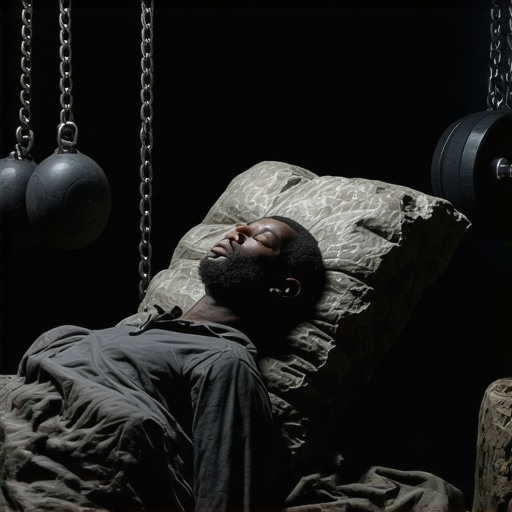
The night descends, and with it, the promise of reprieve. Yet, for some, sleep offers no gentle embrace. Instead, the very symbol of repose – the pillow – transforms, becoming an unyielding stone beneath the head, a relentless weight pressing upon the spirit. This arresting image, of a pillow hard as stone in an Islamic dream, serves as a potent gateway into the complex interplay between the personal psyche and the spiritual landscape, a message whispered from the depths of the unconscious, amplified by cultural and religious understanding. It speaks not of a mere physical discomfort, but of a profound psychic burden, an internal landscape fraught with unresolved tensions and spiritual anxieties.
The Unyielding Pillow: A Symbol of Psychic Weight
In the language of dreams, nothing is arbitrary. The pillow, universally understood as a support for rest and comfort, when rendered “hard as stone,” immediately signals a profound lack of inner peace. From a Jungian perspective, this is the Self communicating through stark metaphor, bypassing the ego’s defenses to highlight a critical psychic state. This dream image is an Archetype of the burden, a universal motif representing the weight of responsibility, unresolved guilt, or unacknowledged suffering that an individual carries. It is the antithesis of solace, reflecting a soul that finds no true repose. The very act of lying down, a surrender to the unconscious, is met with resistance, indicating a conscious ego unable or unwilling to fully release its grip. In the Islamic tradition, dreams are often seen as messages from Allah, reflections of one’s spiritual condition, or insights into hidden truths. A dream of a hard pillow could thus be interpreted as a divine warning, urging the dreamer to examine their actions, faith, or adherence to spiritual principles. It might signify a heart hardened by worldly attachments, neglect of religious duties, or the weight of unfulfilled obligations. The discomfort of the stone pillow parallels the spiritual discomfort of a soul at odds with its divine purpose, or burdened by worldly concerns that obscure spiritual clarity. This symbolic discomfort compels introspection, pushing the individual towards an awareness of the factors that deny them true peace.
Echoes of the Unconscious: Unpacking Hidden Turmoil
The hard pillow is rarely an isolated symptom. Dreams, as manifestations of the Collective Unconscious, often present a constellation of symbols that collectively illuminate the dreamer’s inner world. Consider other dream elements that frequently accompany such a sense of burden: a thunderclap shaking the house, for instance. This isn’t merely a weather phenomenon; it is a disruptive, often violent, external force reflecting an internal upheaval. It can signify a sudden shock, a traumatic event, or a profound realization that shatters the established order of one’s psychic structure. The stability of the “house” – symbolizing the self or one’s life structure – is compromised, echoing the unrest represented by the stony pillow. A flower wilting, another powerful image, speaks to a diminishing vitality, a fading hope, or the decline of a project, relationship, or even one’s spiritual fervor. The beauty and promise of the blooming flower are replaced by decay, indicating a deep sense of loss or a fear of losing one’s inner bloom. This wilting often resides in the Sjenka (Shadow), the unacknowledged aspects of self that drain life force, whether through suppressed grief, unexpressed creativity, or ignored spiritual decay. Furthermore, dreams of hanging clothes to dry in the rain reveal a futile attempt at cleansing or renewal. The effort is there, but the environment thwarts the outcome, suggesting endeavors that feel wasted or efforts towards purity that are perpetually hindered. This can link to a sense of stagnation or frustration in one’s spiritual journey, where sincere efforts seem to yield no fruit. The imagery of tearing a page from a book, conversely, may signify a conscious or unconscious desire to erase a part of one’s personal history, to deny a particular narrative, or to reject knowledge or a difficult truth. This act of self-censorship contributes to the burden, as true peace cannot be found in avoidance. Similarly, a car door not closing points to a feeling of vulnerability and lack of security in one’s journey through life. The “car” represents one’s individual path and agency; a door that won’t close implies exposure to external threats or an inability to contain one’s inner world. This resonates with the experience of a ‘lost key’ or ‘losing house keys’, suggesting a compromised sense of security or inability to access inner peace. Islamic Dream of Lost Keys: Missed Opportunities. A phone screen cracking suggests broken communication, a distortion in perception, or an inability to connect effectively with others or with one’s own inner wisdom. Such a crack can be a manifestation of the Shadow obstructing clear communication. The symbolism of a revolving door spinning fast evokes a sense of being caught in repetitive cycles, making no real progress, or feeling disoriented and lacking clear direction. This stagnation, this feeling of an unresolvable loop, is a significant psychic burden. Unreadable handwriting on walls speaks to messages or truths that are present but remain unacknowledged or uncomprehended. These might be warnings from the unconscious, spiritual guidance, or internal wisdom that the ego is failing to decipher, contributing to the general sense of unease. A painting that changes when unseen introduces a potent element of unstable reality or self-deception. It suggests that when the conscious mind isn’t actively observing, deeper, perhaps unsettling, truths emerge or shift, hinting at an internal world that is not what it seems on the surface. Finally, eating during Ramadan fasting is a powerful transgression within an Islamic context, signifying a break in spiritual discipline, an internal conflict between desire and sacred duty, or an act of conscious or unconscious rebellion against spiritual principles. This directly contributes to a spiritual burden, potentially generating guilt or a profound sense of self-reproach. These seemingly disparate dream images coalesce around a central theme of burdens, obstacles, and an internal wrestling match that denies the dreamer authentic rest. They are all facets of the Sjenka expressing itself, demanding attention to unaddressed psychological or spiritual conflicts.
Navigating the Inner Wilderness: From Burden to Breakthrough
The Jungian Mystic views such dreams not as omens of inevitable misfortune, but as profound invitations to Individuation – the lifelong psychological process of integrating the conscious and unconscious, making one whole. A pillow hard as stone is a direct call from the Self to the ego, urging a re-evaluation of one’s life path, values, and spiritual practices. In a world saturated with external distractions and demands, the modern individual is particularly susceptible to accumulating psychic burdens without conscious awareness. The relentless pursuit of material success, the pressures of social media, and the constant digital noise can lead to a hardening of the inner landscape, making genuine rest and spiritual peace elusive. The dream, therefore, acts as an internal compass, pointing towards areas in need of healing and attention. To engage with such a dream actively means to embark on a quest for self-knowledge. It involves acknowledging the presence of these burdens, whether they manifest as professional stress, relationship conflicts, or a creeping spiritual emptiness. Techniques such as dream journaling, where one records and reflects on dream images, can provide invaluable insights. Active imagination, a Jungian practice, allows the dreamer to re-enter the dream state in a conscious way, interacting with its symbols to understand their deeper meaning. From an Islamic perspective, this could involve increased prayer (dua), seeking forgiveness (istighfar), charity (sadaqah), and reflecting on the Quran and Hadith for spiritual guidance. The dream of a hard pillow becomes a catalyst for spiritual purification and renewal. The feeling of ‘flickering light bulb’ in dreams, a symbol of spiritual instability, further emphasizes the urgency of this introspection. Islamic Dream of a Flickering Light Bulb: Spiritual Instability. Confronting the Sjenka revealed through these dreams – the unacknowledged fears, resentments, or transgressions – is crucial. This is not about self-condemnation but about integration and conscious growth. The stony pillow demands that we question what we carry, why we carry it, and how we might lay it down. The path to a softer pillow, to genuine inner peace, lies in acknowledging the Numinous quality of these nocturnal messages and responding with courage and self-awareness. It might involve letting go of old narratives, as suggested by “tearing a page from a book,” or re-establishing clear boundaries, indicated by the “car door not closing.” It is a profound act of self-care and spiritual devotion.
Dispelling Mists: Clarifying Dream Interpretations
**1. Are dreams of burdens literal predictions of misfortune?**No. From a Jungian perspective, dreams are not prescient, fortune-telling devices but rather symbolic communications from the unconscious psyche. They reveal the current state of the soul, its imbalances, and its needs. A dream of a hard pillow or a wilting flower points to internal states, potential challenges, or areas requiring attention, not necessarily a predetermined future event. In Islamic dream interpretation, while some dreams are believed to be prophetic, the majority are considered to be reflections of one’s internal state, worldly affairs, or even whispers from Shaytan (Satan). The emphasis is on reflection and seeking guidance rather than fatalistic acceptance.**2. Is a “negative” dream, like a thunderclap or a cracked screen, always a bad omen?**Not at all. While unsettling, such dreams often serve as crucial wake-up calls. A thunderclap shaking the house might signify a necessary disruption to an unsustainable status quo, forcing a much-needed change. A cracked phone screen, while indicating broken communication, can highlight the need to repair relationships or to find clearer ways of expressing oneself. These are opportunities for growth and transformation, urging the dreamer to confront uncomfortable truths or address neglected issues. Even the experience of an ‘unwinnable game’ in a dream can be a powerful symbol for confronting life’s struggles and learning new strategies. Islamic Dream of an Unwinnable Game: Life’s Struggles.**3. Can Jungian analysis and Islamic dream interpretation coexist or are they mutually exclusive?**Far from being mutually exclusive, these two approaches can offer complementary layers of understanding. Islamic dream interpretation provides a spiritual and theological framework, often linking dream symbols to religious obligations, moral conduct, and divine messages. Jungian analysis, on the other hand, delves into the universal Archetypes and personal unconscious, providing psychological insights into the individual’s journey of Individuation. When interpreted together, one might see the “stony pillow” as a call for spiritual rectification (Islamic view) and simultaneously as a symbol of the ego’s resistance to its own integration (Jungian view). Both perspectives ultimately aim for greater self-awareness and a more harmonious existence, both inwardly and outwardly, often pointing towards a need for spiritual healing, as suggested by the ’empty pharmacy’ dream. Islamic Dream of an Empty Pharmacy: Seeking Spiritual Healing.
The Stone Transformed: Finding Solace in Self-Awareness
The dream of a pillow hard as stone, alongside its accompanying imagery of distress and disruption, is more than a fleeting nocturnal episode; it is a profound message from the depths of the psyche and, within an Islamic framework, a potential communication from the Divine. It underscores the universal human experience of carrying burdens, whether spiritual, psychological, or existential. Rather than a harbinger of doom, this dream serves as a powerful catalyst for introspection and transformation. It invites the dreamer to confront the Sjenka, to acknowledge the unyielding aspects of their inner landscape, and to embark on the path of Individuation. By consciously engaging with these symbolic messages, understanding their Archetypal significance, and integrating them with the wisdom of one’s spiritual tradition, the hard stone of discomfort can begin to soften. The restless sleep can give way to genuine repose, not through avoidance, but through the profound and Numinous act of self-awareness and spiritual realignment. The discomfort is not the end, but the beginning of a journey towards true inner peace and the integration of the Self.
This post offers a profound reflection on how dreams, especially within an Islamic context, serve as messages from the subconscious and possibly divine guidance. I’ve noticed in my own spiritual journey how unresolved burdens, whether guilt or worldly attachments, often manifest as challenging dream symbols like a hard pillow or wilting flowers. It’s interesting to consider how these images push us toward self-awareness and inner healing. I wonder, from your experience or understanding, how can someone practically begin to address these deep-seated burdens to soften the ‘stone pillow’? Techniques like dream journaling or increased spiritual practices seem helpful, but what approach might be most accessible for someone just starting this process? I’d love to hear other perspectives on translating these symbolic dreams into tangible steps for inner peace and spiritual growth.