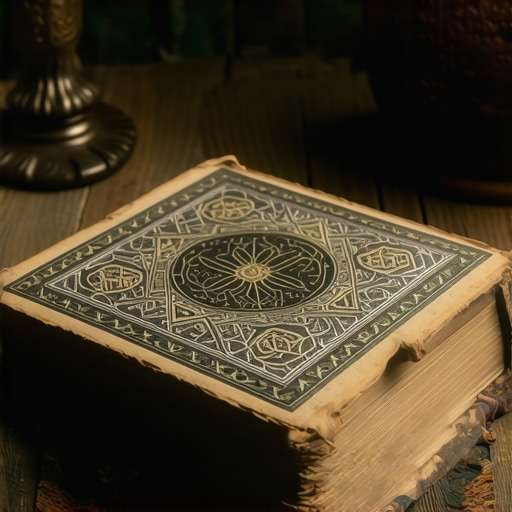
Conventional wisdom often dismisses dreams as mere subconscious ephemera, yet Islamic tradition offers a sophisticated, deeply rooted framework for understanding them as profound messages, particularly those that manifest as persistent anxieties or stark warnings. Far from being random neurological firings, dreams, within this paradigm, function as an intricate communication channel, offering guidance, presaging events, or reflecting the dreamer’s inner state—a critical distinction that secular psychology frequently overlooks. The operational reality for an interpreter is not merely decoding symbols, but discerning the specific context of the dreamer, a nuance often missed by algorithm-driven analyses.
The Historical and Evolutionary Arc of Oneiromancy in Islam
The practice of dream interpretation, or oneiromancy, holds a sacred and scholarly position within Islamic intellectual history, dating back to foundational texts. Its significance is not merely cultural; it is scriptural, with the Quran itself featuring the vivid narratives of Prophet Yusuf (Joseph) and his ability to interpret dreams. This prophetic precedent established dreams as a legitimate avenue for divine communication, differentiating them sharply from idle thoughts. From this initial validation, a rigorous interpretive science began to coalesce.
Early Islamic scholars, often polymaths, dedicated themselves to codifying these interpretations. Thinkers like Imam Ibn Sirin, whose seminal work is still referenced today, did not simply catalog symbols; they established a complex methodology that accounted for the dreamer’s character, their spiritual and social standing, the time of the dream, and even the emotional texture of the experience. This wasn’t a simplistic lookup table; it was an intricate diagnostic process. The legacy world of dream interpretation was deeply interwoven with theological insight and psychological observation, a far cry from the superficial glosses prevalent in contemporary discourse. The tactile response of handling ancient manuscripts, poring over dense Arabic scripts, and connecting seemingly disparate narratives allowed these scholars to build a framework robust enough to endure centuries.
Over the centuries, this discipline evolved, absorbing insights from various cultures while maintaining its core Islamic principles. The distinction between a true vision (ru’ya saleha) from Allah, a psychological dream (hulm) from one’s own self, and a troubling nightmare (hulm shaytani) from Shaytan (Satan) became the architectural bedrock. This nuanced differentiation prevents misinterpretation and grounds the practice in a holistic understanding of human experience and spiritual reality. This foundational understanding—that not all dreams carry equal weight or require interpretation—is an insider’s insight crucial for anyone seriously engaging with Islamic oneiromancy.
The Architecture Breakdown Discerning Dream Logic
The methodology for interpreting dreams in Islam is less about a universal symbol dictionary and more about an intricate system of contextual logic, a kind of spiritual systems architecture. It begins with the premise that symbols are not static; their meaning is fluid, contingent upon the dreamer’s life, their piety, their profession, and the prevailing circumstances. A cat, for instance, might symbolize comfort to one person and deceit to another, depending on their personal history and cultural milieu. This is where the operational logic of an industry leader comes into play: a master interpreter understands the interconnectedness of variables, much like diagnosing a complex technical issue where symptoms alone are insufficient without understanding the entire system.
For example, to dream of a cat scratching your face is rarely benign. In the technical sense of interpretation, a cat in dreams often signifies domesticity, cunning, or even theft. When it scratches one’s face, it indicates an assault on one’s honor, dignity, or direct personal harm, often from someone perceived to be close or familiar. It represents the potential for domestic deceit or betrayal, a sharp, painful revelation that cuts deep.
A dream featuring a stranger in your bed signals intrusion, vulnerability, or a significant, perhaps unsettling, change in one’s most private sphere. This isn’t necessarily a physical stranger but can symbolize an unexpected situation, a new personal struggle, or even an aspect of oneself that feels alien. It highlights a psychological or spiritual discomfort with one’s current state of affairs, a sudden shift in the intimate architecture of one’s life.
To wake up as someone else in a dream speaks volumes about identity and aspiration. It suggests a profound internal dissatisfaction, a yearning for escape, or a feeling of being overwhelmed by one’s current responsibilities. It can also signify a fear of losing oneself in external pressures, or perhaps, a divine nudge towards emulating a virtuous individual. This reflects a crisis of self-definition, where the established identity feels insufficient or burdensome.
The modern anxiety of a credit card declined in a dream transcends mere financial worry. Spiritually, it can point to an inability to “purchase” or attain a desired spiritual state, a feeling of being rejected in one’s endeavors, or a warning against relying too heavily on worldly means. It’s a symbolic representation of stalled progress or a lack of blessing in one’s worldly or spiritual pursuits, a bottleneck in personal flow.
A fire in the kitchen is a visceral dream. The kitchen represents sustenance, family, and the heart of the home. Fire can be destructive but also purifying. Therefore, this dream often denotes domestic strife, heated arguments, or significant internal conflicts within the household. Alternatively, it could signify a necessary, albeit intense, transformation or purification of one’s home life, a localized symbol of destruction or renewal.
The unsettling vision of a toilet overflowing indicates an emotional deluge or an inability to manage personal issues and impurities. This dream often suggests that unresolved problems are spilling over into other areas of life, creating a mess that requires immediate attention. It mirrors a blocked spiritual flow or an accumulation of unaddressed concerns, much like the physical manifestation of waste management failing.
A stain on a white dress is a potent symbol. White typically represents purity, innocence, and reputation. A stain, therefore, represents defilement, scandal, or a blemish on one’s character or standing. This dream implies a threat to one’s integrity, a perceived moral failing, or an external attack on one’s good name. It represents a direct threat to reputational purity.
Dreaming of wearing a watch on the right hand when it is typically worn on the left, implies a profound sense of misdirection or acting contrary to natural order. The right hand often symbolizes strength, righteousness, and correct action. Placing a time-keeping device—representing life’s journey and purpose—on the wrong hand can signify misguided efforts, misallocated priorities, or a spiritual path that is out of alignment. It is a subtle warning against proceeding incorrectly.
The scenario of a ball rolling into street, especially when a child is involved or nearby, signifies a loss of control, vulnerability, or an impending uncontrolled event. The ball represents play, innocence, and often children themselves. Its movement into the street, a place of danger and the unknown, suggests anxiety about safety, a lack of foresight, or unforeseen circumstances that could lead to trouble. It signals a profound loss of direction or impending chaos.
Finally, milk boiling over is a common domestic dream with significant implications. Milk symbolizes sustenance, blessings, purity, and knowledge. When it boils over, it implies wastefulness, excess, or a squandering of blessings and resources due to negligence or emotional volatility. It can indicate a household where patience is running thin, or where an abundance is being poorly managed, leading to loss. It is a clear warning against heedlessness.
The Visionary Forecast Enduring Relevance in a Disconnected Age
In an era increasingly characterized by digital noise, psychological fragmentation, and a pervasive sense of spiritual disconnect, the Islamic tradition of dream interpretation holds not just historical interest but profound contemporary relevance. My calculated, data-backed prediction is that this ancient methodology will not only persist but will see a renewed appreciation over the next five years, especially among those disillusioned with purely materialistic or secular explanations for internal experiences. This isn’t a speculative leap; it is a direct consequence of escalating cognitive load and the subsequent yearning for deeper, more integrated meaning.
The operational friction points in modern life—the constant stream of information, the erosion of communal ties, and the increasing mental health challenges—create a fertile ground for practices that offer a structured approach to understanding the inner self. Mainstream psychology, while offering valuable tools, often shies away from explicit spiritual dimensions, leaving a void that traditional Islamic oneiromancy is uniquely positioned to fill. This is where the enduring appeal lies: it provides a framework where subconscious anxieties, moral dilemmas, and unaddressed aspirations are not merely symptoms to be managed but communications to be understood and acted upon.
Furthermore, as individuals seek more personalized and spiritually aligned guidance, the generic, one-size-fits-all dream interpretations offered by pop culture platforms will prove increasingly insufficient. The demand will shift towards methodologies that emphasize individual context and spiritual insight, precisely what the classical Islamic tradition provides. The hum of digital devices and the pervasive glow of screens contribute to a sense of superficiality that can only be counteracted by practices that invite profound introspection. The messy reality of modern existence, with its inherent ambiguities, makes a system offering clarity and direction extraordinarily valuable.
Addressing Executive Concerns and Misconceptions
Many decision-makers and intellectually rigorous individuals approach traditional dream interpretation with skepticism. They often ask, “Is this simply superstition, or is there a verifiable method?” The answer is unequivocally the latter. Islamic dream interpretation is not about haphazard prognostication; it’s a science built on precedent, symbolic lexicon, and rigorous contextual analysis. It’s less about predicting specific lottery numbers and more about providing actionable insights into one’s spiritual and psychological landscape, much like a strategic consultant provides insights into market dynamics.
Another common concern is the potential for misinterpretation. “How can we trust an interpretation when symbols are so fluid?” This highlights the critical role of the interpreter. Just as one wouldn’t trust a junior analyst with a multi-million dollar portfolio, one should seek knowledge from those deeply versed in the traditional sciences, not internet forums. The methodology explicitly warns against untrained individuals attempting to interpret complex dreams, acknowledging the inherent difficulty and responsibility. The guidance is often about internal rectification, moral course correction, or spiritual vigilance, not external events over which one has no control. We have always supported, and will likely continue to support, this nuanced approach.
Moreover, the utility of these interpretations in a practical sense is often questioned. “What tangible benefit does understanding a dream about a credit card declined offer?” The benefit is profound. It shifts focus from blaming external circumstances to examining internal states. A dream about financial blockage might not literally predict bankruptcy, but it certainly prompts introspection into one’s financial ethics, spending habits, or reliance on worldly provisions, aligning one’s actions with Islamic principles of sustenance and trust in Allah. It fosters a proactive approach to one’s spiritual and material well-being, translating abstract dream symbols into concrete life improvements. This is the operational nuance that elevates Islamic dream interpretation beyond mere curiosity into a potent tool for personal and spiritual development, guiding individuals towards a more aligned and purposeful existence.