
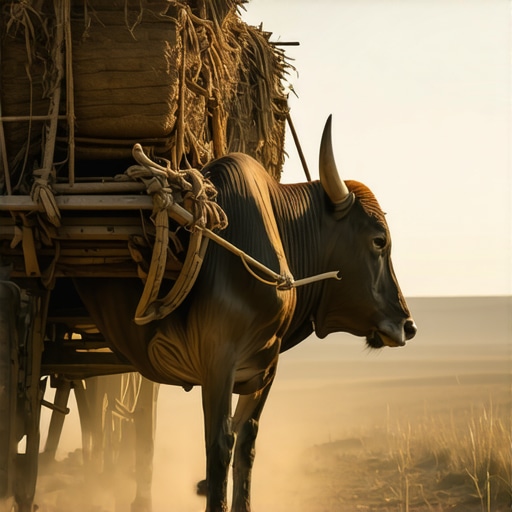
The Yoked Ox: Understanding the Symbol of Labor and Sustenance
In the quiet theater of the subconscious, few symbols carry as much weight—literally and figuratively—as the yoked ox. For centuries, across various cultures and especially within traditions that value the concept of Rizq (divine provision), the ox has stood as the ultimate engine of survival. When you see a beast of burden in your dreams, constrained by a wooden harness, your mind is communicating something profound about your livelihood, your efforts, and the unseen weights that may be holding you back from true prosperity. To understand this vision, we must look beyond the animal itself and examine the relationship between the creature, the yoke, and the ground it tilled.
The Traditional Symbolism of the Yoked Ox
In the folklore and traditional wisdom of many cultures, the ox is not just an animal; it is a sign of strength, patience, and productivity. Historically, an ox was a farmer’s most valuable asset. It represented the ability to turn the earth and prepare it for seeds. Without the ox, there was no harvest; without the harvest, there was no survival. However, the introduction of the yoke changes the narrative. A yoke is a tool of control. It directs the animal’s power toward a specific task. In many traditional interpretations, a yoked ox symbolizes a life of service and hard work. But there is a fine line between disciplined labor and soul-crushing servitude.
When we discuss the traditional perspective, we often find that the ox represents the earthly life and the struggle to earn a living. According to the Islamic dream dictionary – interpreting dreams of animals, large cattle often symbolize years of plenty or years of famine. A yoked ox, specifically, points to the mechanism of your work. Are you the master of the plow, or are you the one being driven? The ancestors believed that if the ox appeared healthy and the yoke seemed light, the dreamer was in a period of fruitful discipline. However, if the ox appeared exhausted or the yoke was heavy and scarred, it was a warning that the dreamer’s current path of earning—their Rizq—was being sabotaged by unnecessary burdens or oppressive circumstances.
The Psychological Significance: The Weight of the Subconscious
From a psychological standpoint, the yoked ox is a mirror of our internal state regarding responsibility and constraint. This symbol often emerges when a person feels they are ‘carrying the world on their shoulders.’ The yoke represents the ‘shoulds’ and ‘musts’ that we have accepted from society, family, or ourselves. If you find yourself dreaming of this animal, it is essential to ask: What am I pulling that isn’t mine to carry?
Layer 1: Internalized Labor and Burnout. In our modern world, we rarely see oxen, but we all know the feeling of being harnessed to a desk, a mortgage, or a demanding career. The ox reflects our primal drive to provide. If the dream feels suffocating, it suggests that your emotional state is one of transition or extreme stress. You may be working hard, but you feel like you aren’t getting anywhere—as if the field you are plowing is endless and the soil is made of stone. This is often a precursor to burnout. Much like dreams about losing teeth, which often signal a loss of control or power, the yoked ox reflects a loss of autonomy in your daily life.
Layer 2: The Sabotage of Rizq. Psychologically, we often sabotage our own prosperity through ‘limiting beliefs.’ These are the mental yokes. If you believe that money only comes through suffering, your subconscious will manifest a yoked ox to show you that your sustenance is being filtered through a lens of pain. This psychological burden sabotages your Rizq because it prevents you from seeing easier, more fluid ways to achieve success. You become so focused on the heavy pulling that you miss the open gate right next to you.
Variations of the Yoked Ox in Dreams
The specific details of your dream can drastically change the meaning. Just as snakes in dreams can represent either hidden enemies or healing, the ox varies based on its condition.
- The Broken Yoke: If you dream of an ox that has broken its harness, this is a powerful sign of liberation. It suggests that a period of restriction is ending, and you are about to experience a breakthrough in your personal or professional life. This is often linked to dreams of wealth and prosperity, as the energy once spent on the struggle is now free to create abundance.
- Two Oxen Yoked Together: This often symbolizes a partnership. If the two animals are working in harmony, your marriage or business partnership is well-aligned. If they are pulling in different directions, it is a sign of fitna or conflict that is hindering your progress. This is similar to the tension found in dreams of war and conflict, but on a more personal, domestic scale.
- A Wild Ox Refusing the Yoke: This represents your inner rebel. Perhaps you are in a career or a relationship that goes against your nature. Your subconscious is telling you that you cannot be tamed by your current circumstances without breaking your spirit.
- Feeding a Yoked Ox: This is a very positive sign. It suggests that you are nurturing your sources of income and that your hard work will be rewarded. It is an act of kindness to yourself and your future.
What to Do: Practical Advice for Self-Reflection
When the yoked ox appears, it is time for a ‘life audit.’ You must identify the saboteurs of your Rizq. Start by asking yourself these questions: 1. Is my current work bringing me closer to my purpose, or is it just a heavy load? 2. Who placed this yoke on me? (Was it a parent, a boss, or my own fear?) 3. Am I neglecting my health and spirit in the pursuit of material gain? Much like dreaming about your mother, which often points to your foundational needs and nurture, the ox asks you to look at how you are providing for your ‘inner household.’
Practical steps include setting boundaries at work, re-evaluating your financial goals, and practicing gratitude. Gratitude is the spiritual ‘un-yoking.’ It shifts the focus from the struggle of the pull to the blessing of the field. By lightening your mental load, you allow your Rizq to flow more naturally, without the friction of constant, agonizing toil.